News
Google argues against isolated data center power systems citing capital inefficiency
Tuesday, March 31, 2026 at 09:17 PM
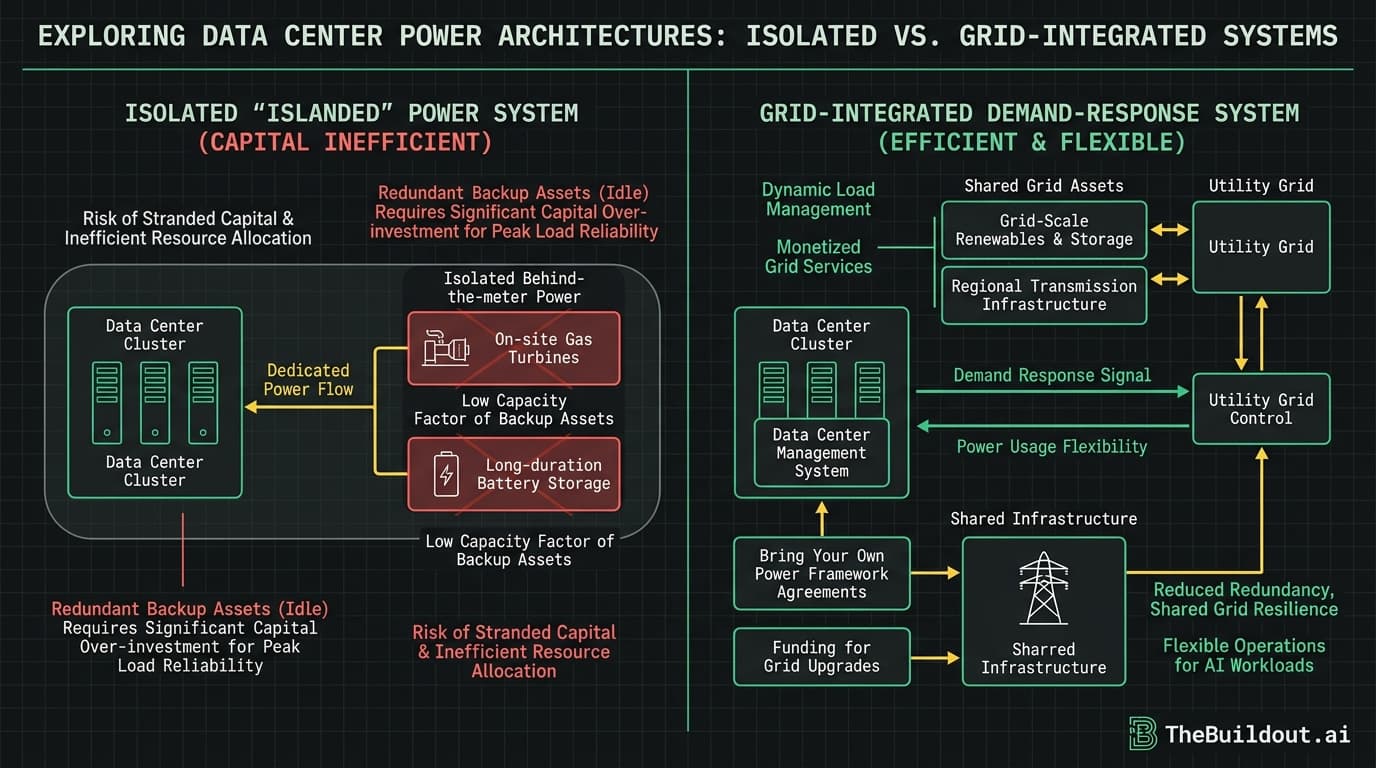
Google is advocating against the development of isolated power systems for data centers, arguing that such architectures lead to inefficient capital allocation and overbuilding for reliability. The company suggests that localized, unshared energy assets do not contribute to overall grid improvement and could increase long-term system costs compared to shared resource models.
Context
As of April 2026, Google is actively lobbying against the trend of "islanded" or isolated data center power systems, arguing that they lead to significant capital inefficiency. During recent industry debates, the company emphasized that building self-contained energy systems requires massive over-investment in redundant assets to ensure reliability. This results in expensive infrastructure, such as gas turbines or backup batteries, sitting idle for the vast majority of the year. Google contends that this isolated approach ties up capital that could otherwise be used to improve the shared public grid.
To address rising AI power demands, Google has instead prioritized integrated solutions like its 1 GW demand-response milestone and a $25 billion investment in PJM region infrastructure. By signing specialized 20-year agreements with utilities like DTE Energy and Xcel, the company aims to fund grid-scale renewable and storage projects. This strategy focuses on "bring your own power" frameworks that avoid shifting costs to residential ratepayers while maintaining the flexibility of a connected, rather than isolated, energy ecosystem.
Sources (12)
Google agrees to curb power use for AI data centers to ease strain on US grid when demand surges | ReutersGoogle to invest $25 billion in data centers, AI infrastructure in PJMDOE ‘emergency’ power plant orders help grid reliability: NERC official | Utility DiveHow we’re making data centers more flexible to benefit power gridsGoogle, DTE deal hints at new power framework | Latest Market NewsHow Google brings its own data center powerOptimizing power distribution and stability in islanded microgrids with wind energy integration using enhanced droop and virtual impedance control - ScienceDirectReducing the cost of capital to finance the energy transition ... - Nature
Related Companies
Google
GOOGL