News
Morgan Stanley says TurboQuant increases GPU inference throughput via KV cache optimization
Wednesday, March 25, 2026 at 01:41 PM
Morgan Stanley analysis of the TurboQuant quantization technique indicates it specifically optimizes the KV cache during AI inference. While it does not reduce GPU model weights or training HBM requirements, it enables 4-8x longer context windows or increased batch sizes on existing hardware. This efficiency gain is expected to increase GPU throughput and potentially drive higher total hardware demand due to the Jevons Paradox.
Context
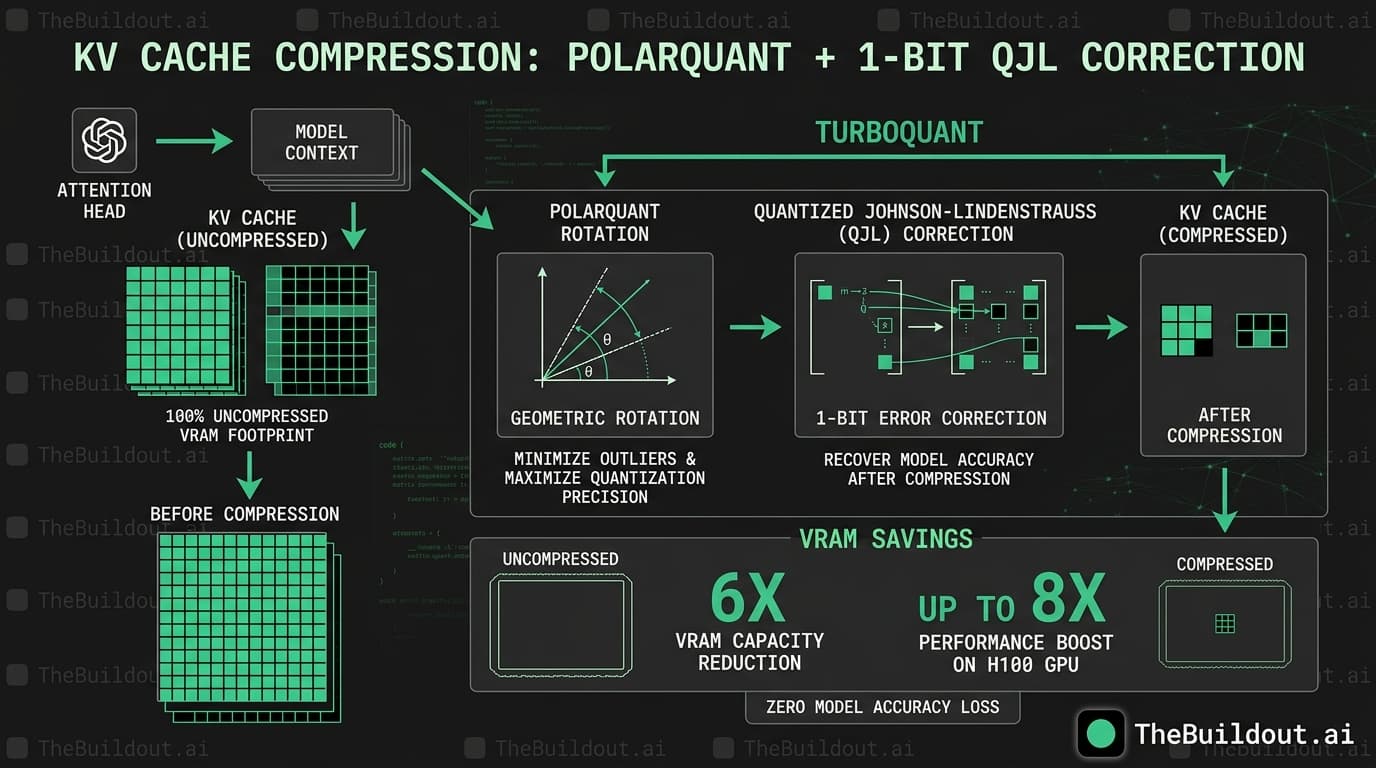
In March 2026, Google researchers introduced TurboQuant, a compression algorithm capable of reducing Key-Value (KV) cache memory requirements by 6x with zero accuracy loss. This technical breakthrough addresses the primary bottleneck in scaling AI inference: the rapid growth of memory usage during long-context tasks. While the algorithm enables 8x faster attention scores on Nvidia H100 accelerators, it specifically targets inference throughput rather than model weights or training workloads. The innovation allows existing hardware to handle significantly larger batch sizes or 4-8x longer context windows, effectively lowering the cost per token for hyperscalers and enabling high-performance models to run on local consumer hardware.
Morgan Stanley analyst Shawn Kim noted that while the efficiency gains initially triggered a slump in memory stocks like Samsung and SK Hynix, the long-term impact is likely a boost in total demand due to the Jevon's Paradox. Kim stated that "a lower cost per token can also lead to higher product adoption demand," arguing that efficiency acts as a catalyst for consumption rather than a substitute for hardware. This perspective suggests that by making AI services cheaper and more accessible, TurboQuant will ultimately drive an increase in the total number of users and complexity of applications, sustaining the long-term requirement for advanced semiconductor infrastructure.
Sources (9)
Google's new TurboQuant algorithm speeds up AI memory 8x, cutting costs by 50% or more | VentureBeatGoogle's TurboQuant AI-compression algorithm can reduce LLM memory usage by 6x - Ars TechnicaGoogle’s TurboQuant AI advance dents memory-chip stocks, but analysts say ‘buy the dip’ | South China Morning PostThe Jevons Paradox: Flawed Consensus View On Efficiency - ForbesMorgan Stanley sees TurboQuant boosting AI efficiency, hyperscalers By Investing.comFrom Efficiency Gains to Rebound Effects: The Problem of Jevons’ Paradox in AI’s Polarized Environmental DebateTurboQuant: Redefining AI efficiency with extreme compressionGoogle Introduces TurboQuant: A New Compression Algorithm that ...
Related Companies
Google
GOOGL